

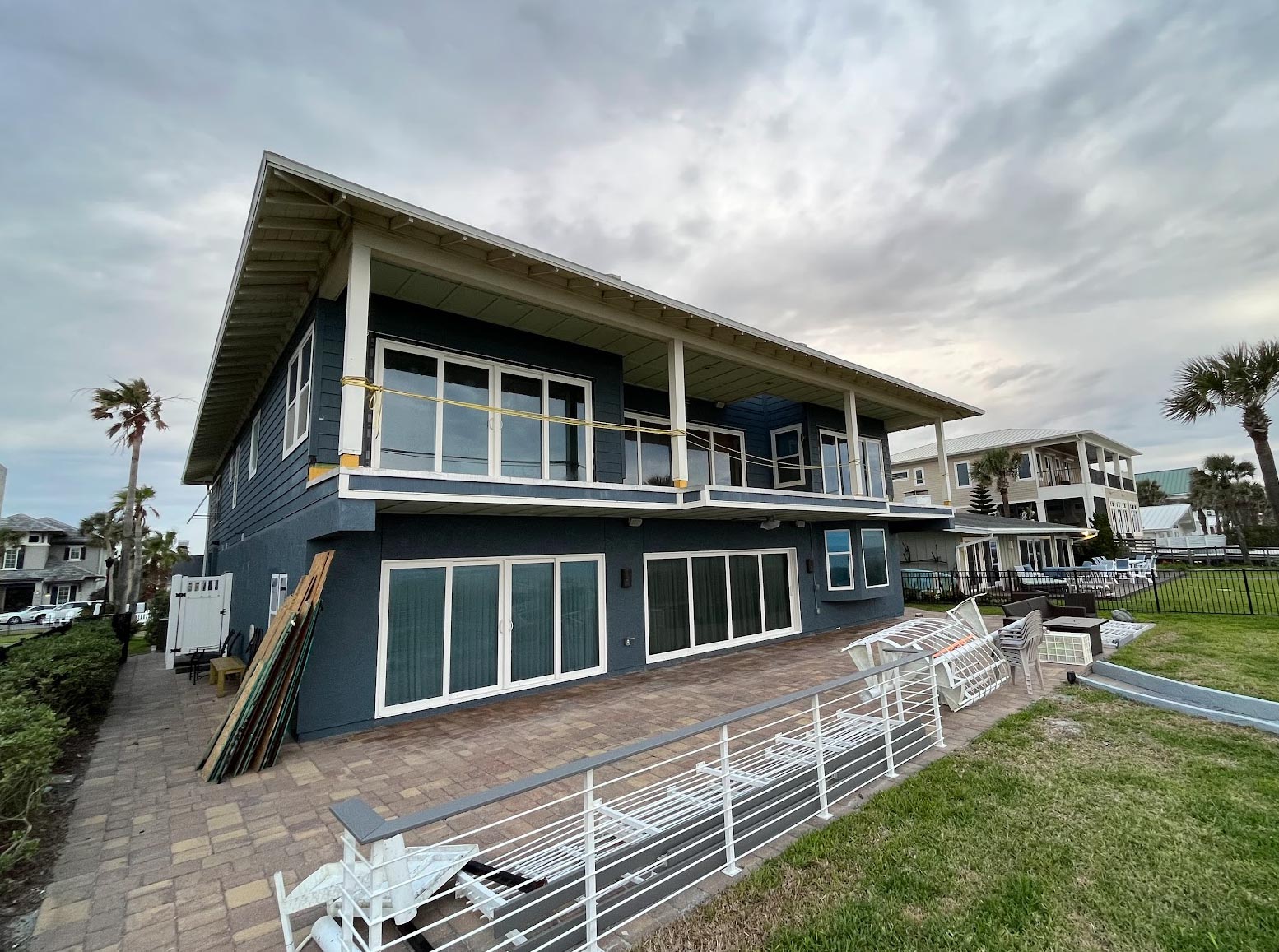
How Salt Air Affects Windows and Doors in Northeast Florida Coastal Homes
Living near the coast is one of the greatest advantages of calling Northeast Florida home. Ocean breezes, warm weather, and easy access to the water make communities such as Jacksonville Beach, Neptune Beach, Atlantic Beach, Ponte Vedra, Amelia Island, and Fernandina Beach highly desirable places to live. However, the same coastal environment that makes this area special can also be hard on a home’s windows and doors.
Salt carried through the air can gradually affect frames, hardware, tracks, finishes, seals, and other exterior components. When combined with Florida’s humidity, heat, wind, and frequent rain, this exposure can cause windows and doors to age faster than homeowners expect. Understanding these effects can help you recognize developing problems, maintain your home properly, and choose products designed for long-term coastal performance.
Why Salt Air Is Hard on Windows and Doors
Ocean spray releases tiny salt particles into the air. Wind can carry those particles inland, where they settle on homes and exterior surfaces. Properties located directly on the ocean generally experience the greatest exposure, but homes several miles from the coastline may also be affected.
Salt naturally attracts and holds moisture. When salt accumulates on metal hardware, frames, fasteners, and tracks, it creates conditions that can accelerate corrosion. Florida’s high humidity gives that process even more opportunity to continue.
The effects are not always immediately visible. A window or door may look fine from a distance while its locks, rollers, hinges, fasteners, or weatherstripping are beginning to deteriorate. Over time, these smaller problems can affect how smoothly the unit operates and how effectively it protects the home from outside air and water.
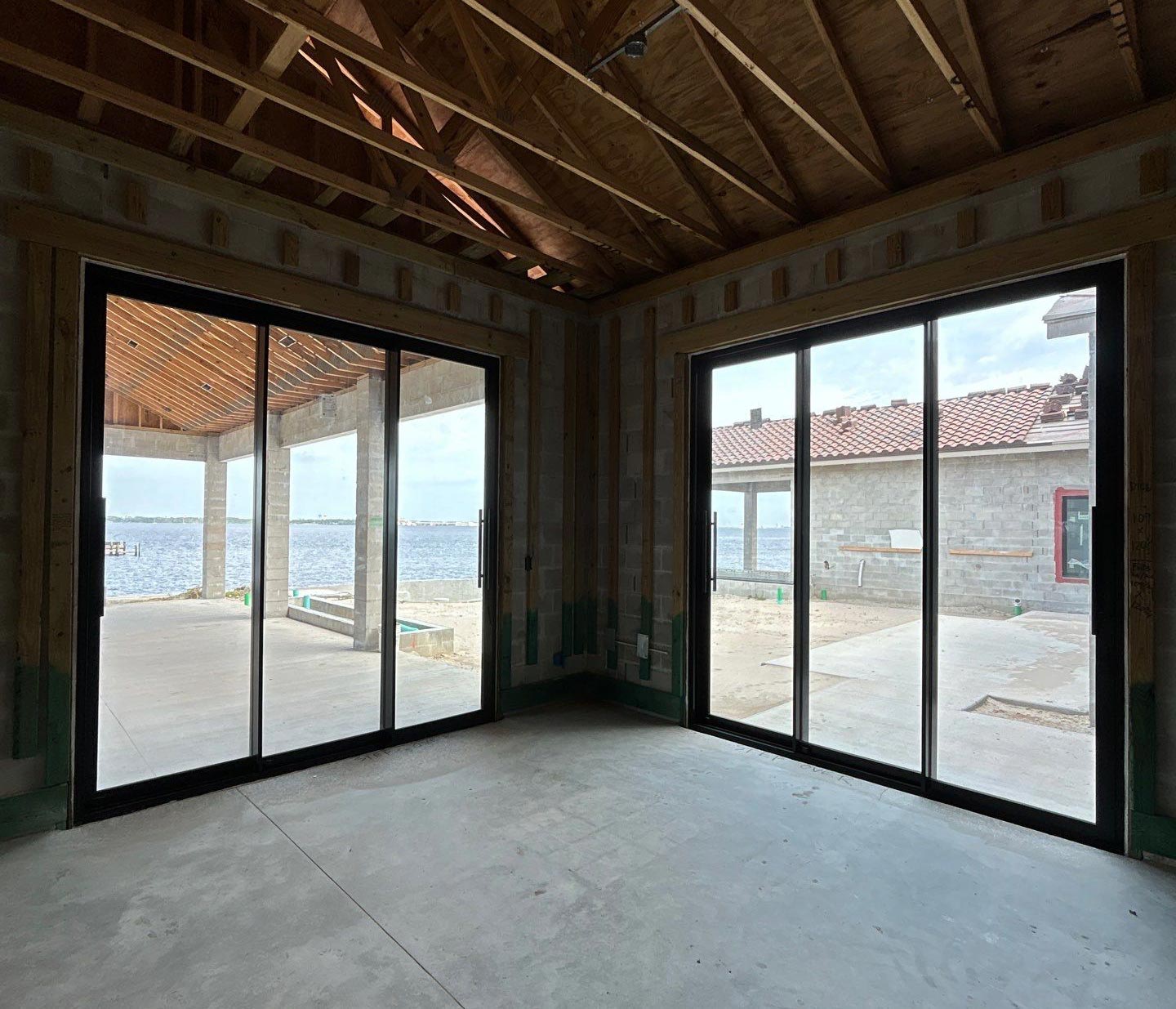
Common Signs of Salt-Air Damage
Coastal exposure affects different products in different ways. The age of the home, its distance from the water, prevailing winds, surrounding landscaping, product quality, and maintenance history can all influence how quickly deterioration develops.
Homeowners in Northeast Florida should watch for several common warning signs:
- White, green, orange, or brown residue on metal hardware
- Pitting, bubbling, fading, or peeling finishes
- Windows that become difficult to open, close, or lock
- Sliding doors that drag, stick, or jump along their tracks
- Corroded screws, hinges, handles, locks, or rollers
- Cracked, brittle, loose, or compressed weatherstripping
- Condensation or fogging between panes of insulated glass
- Drafts around window and door frames
- Water intrusion during wind-driven rain
- Visible separation around frames, trim, or sealant
Some of these conditions may be corrected through cleaning, adjustment, replacement hardware, or new weatherstripping. Others can indicate that a complete replacement is the more dependable long-term solution. Homeowners with older products may also benefit from reviewing the reasons Jacksonville homes are replacing their original builder-grade windows.
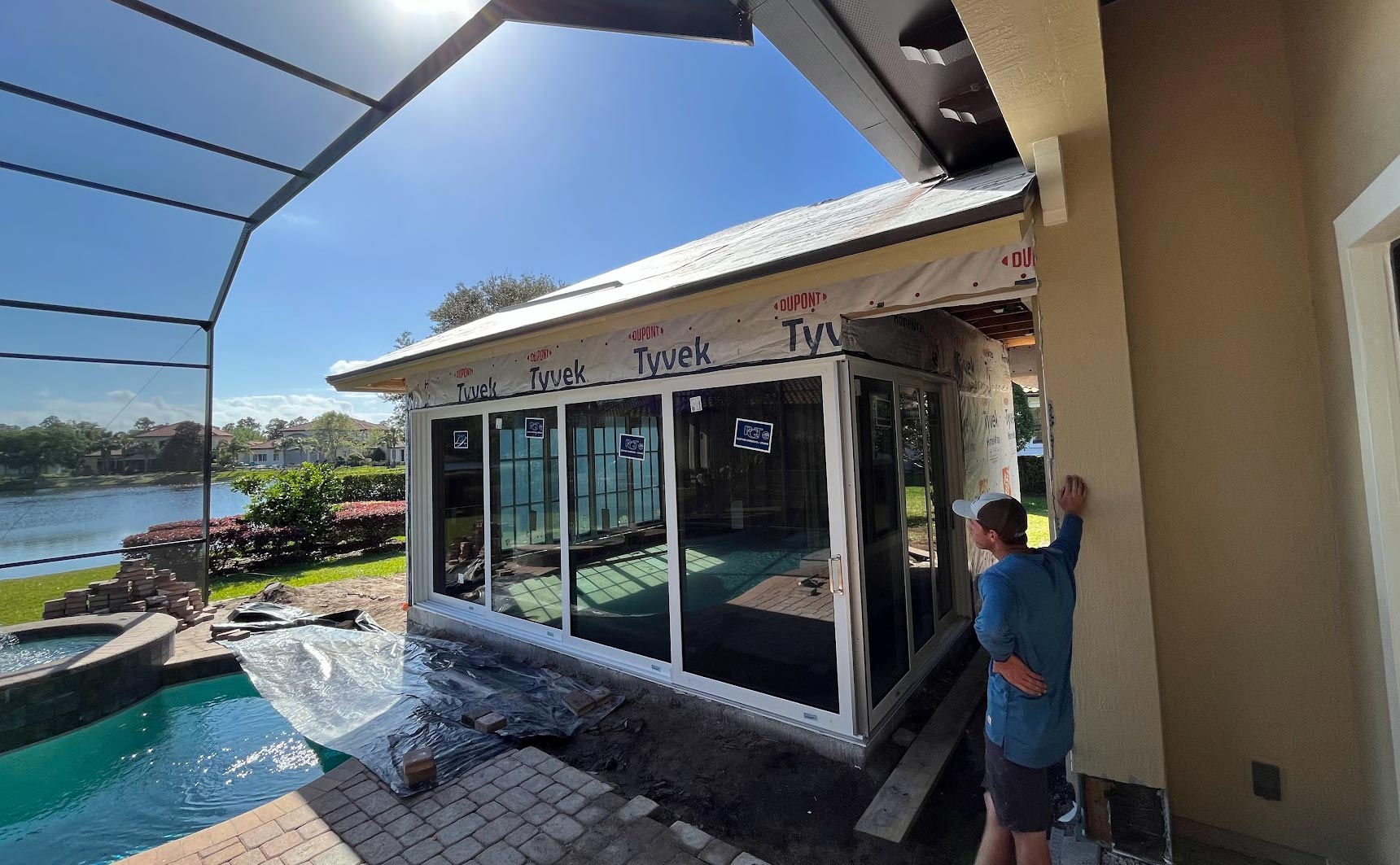
Which Parts Are Most Vulnerable?
Metal Hardware and Fasteners
Hinges, locks, handles, screws, rollers, and other metal parts are particularly vulnerable to coastal corrosion. Once corrosion develops, locks may become harder to operate, hinges can bind, and fasteners may lose strength. Hardware should be examined periodically, even when the surrounding frame still appears to be in good condition.
Sliding Door Tracks and Rollers
Sand, salt, dirt, and moisture commonly collect inside sliding-door tracks. This buildup increases friction and places additional strain on rollers and operating hardware. A door that once moved easily may gradually become difficult to slide. Frigate Window & Door provides professional sliding glass door solutions for homeowners who want smoother operation, expansive views, and improved access to patios, pools, and outdoor living spaces.
Weatherstripping and Seals
Heat and moisture can cause weatherstripping to become brittle, flattened, loose, or cracked. Damaged seals allow conditioned air to escape and may make it easier for humidity or wind-driven rain to enter the home. Insulated glass seals can also fail over time, sometimes producing a foggy or hazy appearance between the panes.
Exterior Frames and Finishes
Quality frames and factory-applied finishes are designed to withstand outdoor conditions, but no exterior product is completely maintenance-free. Salt deposits should not be allowed to accumulate indefinitely. Scratches, exposed metal, worn coatings, and neglected sealant can give moisture more opportunities to affect the assembly.

How to Maintain Windows and Doors Near the Coast
Routine care can help coastal windows and doors operate properly and may slow the effects of salt exposure. The appropriate maintenance schedule will depend on the product manufacturer, the home’s location, and the amount of direct exposure it receives.
Rinse Away Salt Deposits
Periodically rinse exterior frames and glass with clean fresh water. Homes closest to the ocean may require more frequent cleaning than properties farther inland. Use mild cleaning products recommended by the manufacturer, and avoid abrasive tools or harsh chemicals that could damage glass, finishes, sealants, or protective coatings.
Keep Tracks Clean
Vacuum loose sand and debris from sliding-door and window tracks before wiping them clean. Allowing debris to remain in the track can interfere with drainage and make rollers work harder. Only use lubricants approved for the specific product because some products can attract additional dirt or damage components.
Inspect Hardware and Weatherstripping
Operate every window and exterior door periodically. Check locks, hinges, handles, rollers, and weatherstripping for visible wear. Addressing a small hardware issue early may prevent additional stress on the frame or operating system.
Examine Sealant and Drainage Openings
Look for gaps, cracks, or separation around exterior frames. Drainage openings should remain clear so water can escape as the product was designed to allow. Because improper sealant work can trap water or interfere with drainage, significant repairs should be evaluated by an experienced professional.
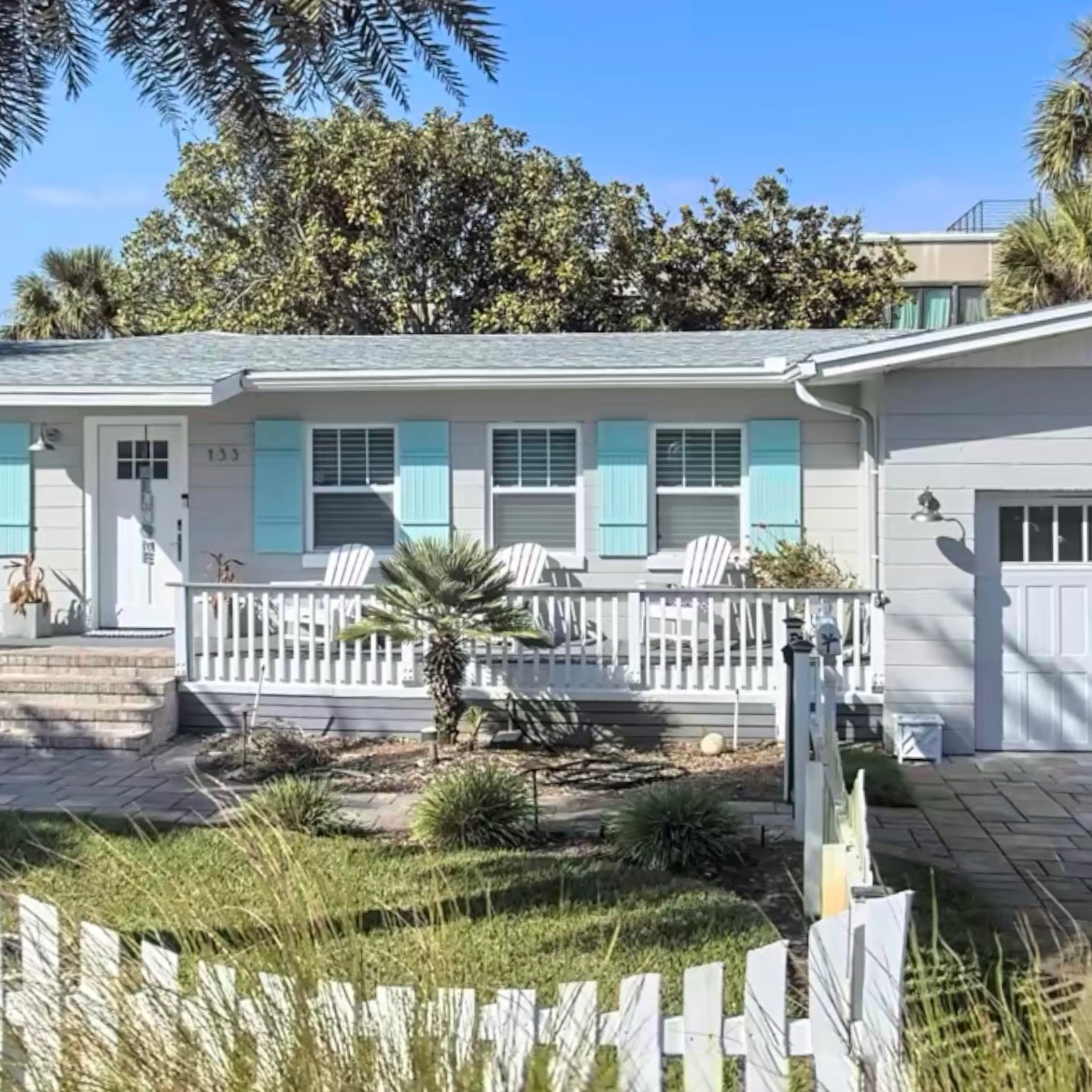
Choosing Windows for Northeast Florida Coastal Homes
When replacement becomes necessary, homeowners should consider more than appearance alone. Frame material, glass configuration, hardware, finish quality, energy performance, installation requirements, and manufacturer guidance all contribute to long-term results.
Well-selected replacement windows can improve comfort, operation, curb appeal, and energy efficiency while providing materials better suited to Florida conditions. Product selection should be based on the home’s location, exposure, architectural style, existing openings, and the homeowner’s priorities.
Coastal homeowners may also want to consider impact-rated products. Impact resistance and corrosion resistance are separate considerations, but both can be important near the coast. Frigate’s guide to hurricane impact windows and doors in Jacksonville explains how impact products can contribute to storm protection, security, and year-round performance.
Choosing Exterior Doors for Coastal Conditions
Exterior doors face many of the same environmental pressures as windows, along with the additional wear created by frequent operation. Entry doors, French doors, patio doors, and large glass systems should be selected with attention to materials, hardware, weather resistance, security, and exposure.
A professionally installed replacement door can improve the appearance of a home while addressing drafts, difficult operation, deteriorating materials, or outdated hardware. Coastal-ready finishes and appropriate components are especially important for doors exposed to direct wind, rain, and salt air.
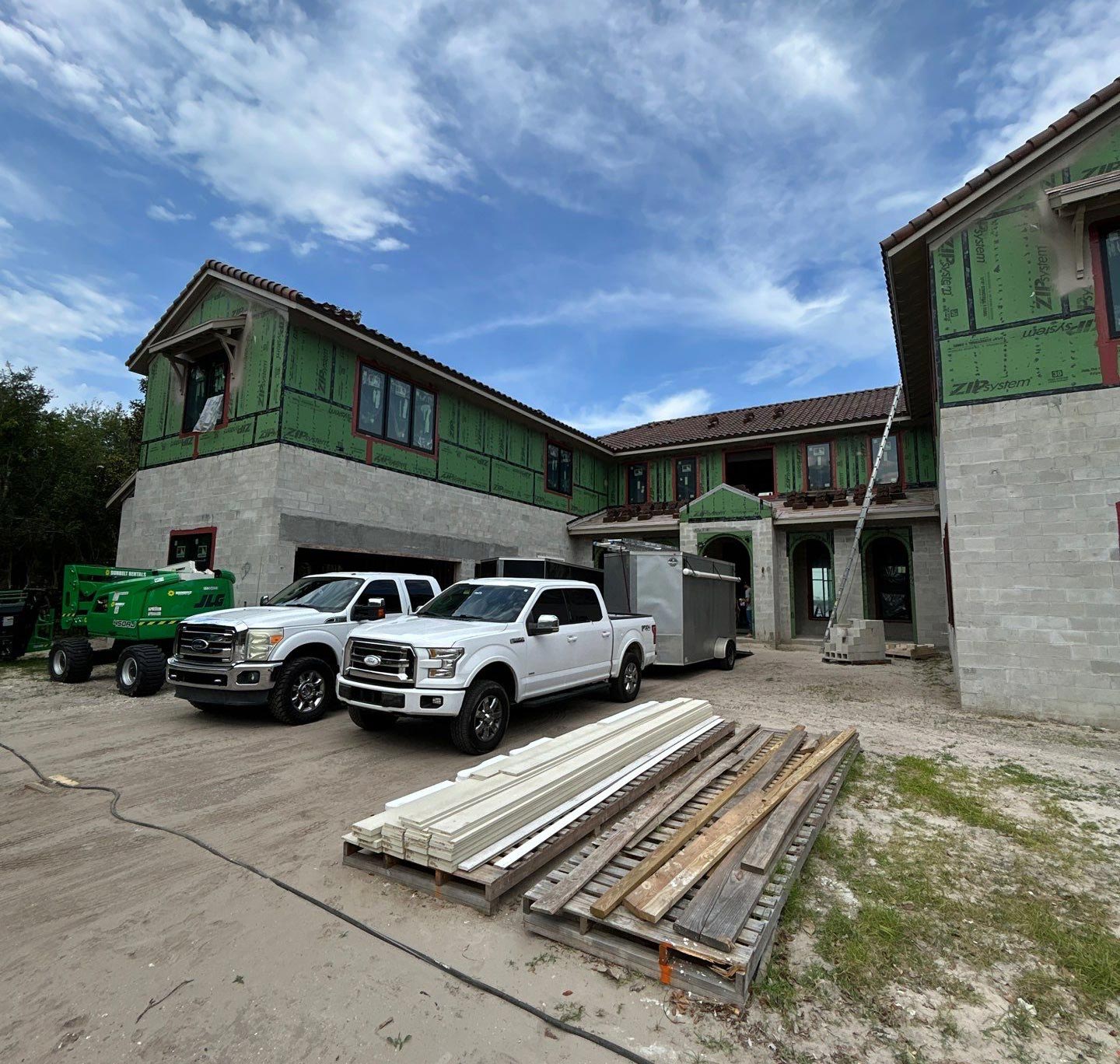
For a new home or major renovation, window and door decisions should be considered early in the design process. Frigate works with homeowners, contractors, and builders on new construction windows and doors, including custom openings and architectural systems designed around the property.
Coastal Window and Door Needs Across Northeast Florida
Not every Northeast Florida community experiences identical conditions. Oceanfront homes in Jacksonville Beach, Neptune Beach, and Atlantic Beach may receive frequent direct salt exposure. Ponte Vedra homes may combine coastal performance requirements with oversized glass, custom entrances, and luxury architectural details. Amelia Island and Fernandina Beach properties may require solutions that respect traditional architecture while performing reliably in a saltwater environment.
Homes farther inland in Jacksonville, Mandarin, Fleming Island, Orange Park, and St. Johns may receive less direct salt exposure, but they still contend with intense sunlight, humidity, heavy rain, and seasonal storms. Product recommendations should reflect the specific property rather than relying on a single solution for every home.
Frigate Window & Door serves homeowners throughout these communities. Explore the company’s complete Northeast Florida window and door service areas to learn more about the products and services available in your community.
Why Professional Installation Matters
Even a high-quality window or door depends on correct installation. The opening must be evaluated, prepared, sealed, fastened, and finished according to the product requirements and conditions of the home. Poor installation can contribute to air leakage, water intrusion, difficult operation, premature deterioration, and reduced performance.
Frigate Window & Door provides comprehensive window and door services with experienced in-house installation professionals. The team helps homeowners compare products, understand practical differences, and select options suited to their homes, goals, and budgets.

Protect Your Coastal Home with the Right Products and Care
Salt air is part of life in Northeast Florida, but it should not be ignored when maintaining or upgrading a home. Regular cleaning, track maintenance, hardware inspections, and timely repairs can help protect windows and doors. When products become difficult to operate, show extensive corrosion, allow drafts, or develop recurring water problems, professional evaluation can help determine the appropriate next step.
For additional guidance about window replacement, exterior doors, sliders, impact products, and home performance, visit the Frigate Window & Door window and door blog.
If you are concerned about salt-air damage or planning a window or door project in Jacksonville, the Beaches, Ponte Vedra, Amelia Island, Fernandina Beach, St. Augustine, or another Northeast Florida community, contact Frigate Window & Door. The team can evaluate your needs and help you choose attractive, durable products designed for your home and coastal lifestyle.